- 55 , Milestone, Nh-73, Panchkula Road, Saha, AMBALA, Haryana, India 133104

Call Now
+91-9518831410

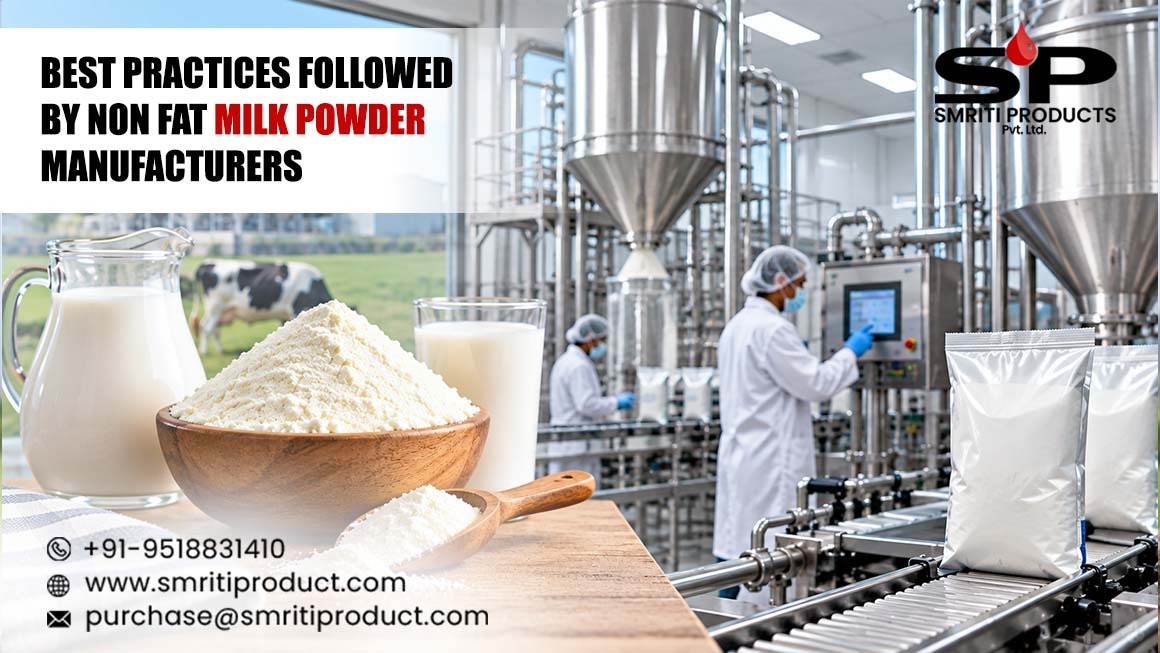
Dairy products are a key industry worldwide for which
shelf-stable ingredients are essential to maintaining nutritional quality and
functional properties. Of these, non-fat dry dairy products play an important
role in bakery, confectionery, beverage and nutritional formulation industries.
To keep up standards of excellence in this competitive environment, high
standards are expected in operations and the strict observance of food safety
procedures is essential. This blog will discuss the key industrial practices,
innovations, and strong hygiene measures adopted by top non fat milk powder manufacturers to guarantee the product
excellence.
It is important to understand the nature of non-fat dry dairy solids before looking into production procedures. The ingredient is made by concentrating the essential proteins, lactose, minerals and vitamins from pasteurized whole milk after the moisture and milk fat have been removed and its moisture threshold is still low. Its main ingredients are high quality Casein and Whey proteins, Calcium and Phosphorus which are essential to commercial food industry production.
Due to low fat content, the product has a long shelf life and is resistant to lipid oxidation, as long as proper humidity and temperature control are maintained during storage. It is used in the manufacture of liquid beverages, fortification of yogurts, texturization of ice cream and preparation of dry mixes, as it is easily soluble, has emulsifying and binding properties.
From farm gate to processing facility, the foundation for the highest quality dehydrated dairy products begins long before processing equipment is used. Professional processors have strict supplier auditing and raw material testing procedures.
The key to making an excellent fine and stable powder from
liquid milk is the use of state-of-the-art engineering and precise thermal
management. Advanced multi-stage processing systems are being used by the top non fat milk powder manufacturers to protect
nutritional value.
To sum up, excellence in dairy dehydration is a multifaceted
task that requires diligent hygiene practices, state-of-the-art thermal
technology and uncompromising quality control from the farm collection to the
final packaging. Premier non fat milk powder
manufacturers go to great lengths to provide the safe, nutritious and
consistent ingredients for the global food industry. With the steadfast
commitment to quality, innovation and food safety, Smriti
Products Private Limited continues to make impact in the dairy
processing industry, ensuring access to a pure nutrition for all consumers.
