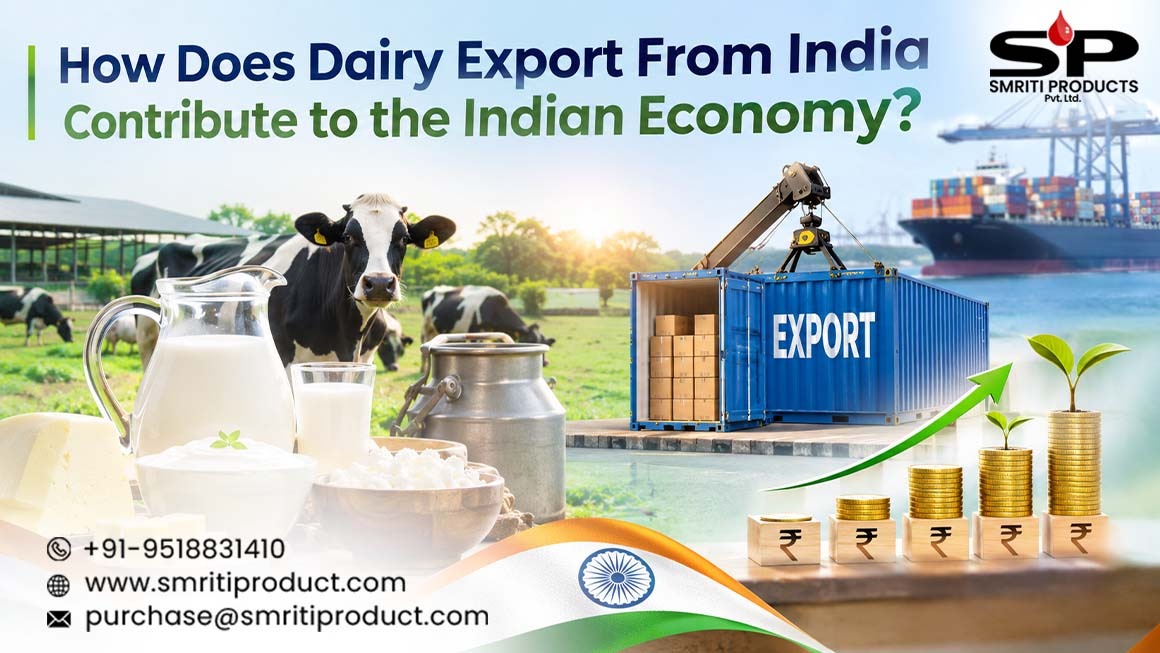
How Does Dairy Export From India Contribute to the Indian Economy?
Dairy export from India - India is the largest milk producing country in the world, making around a 247.87 million tonnes from 2024 to 25. While domestic demand consumes most of this output, dairy export from India has emerged as the vital engine for agricultural growth, foreign exchange earnings and the rural prosperity. This blog explores how the international dairy trade strengthens the national economy, supports the rural farmers and elevates domestic processing standards.
Understanding Dairy Export from India
It refers to the shipment of processed milk and value-added dairy commodities—such as skimmed milk powder, desi ghee, butter, anhydrous milk fat condensed milk and cheese—to global markets. Because liquid milk is perishable and bulky to transport across borders exporters focus on shelf-high-value products. Regulated by authorities like the Agricultural and Processed Food Products Export Development Authority (APEDA) this trade connects milk producers directly to consumers across the Middle East South Asia and North America.
Direct Economic Value and Foreign Exchange Earnings
International dairy trade brings foreign currency into the country helping balance agricultural trade deficits while expanding Indias footprint in the global food supply chain.
Revenue Growth and Key Global Markets
According to APEDA and Directorate General of Commercial Intelligence and Statistics (DGCIS) data India exported 97,524.82 tonnes of dairy products valued at USD 407.12 million during FY 2025–26. Major importing destinations include the United Arab Emirates, Saudi Arabia, the United States, Bhutan and Bahrain.
Shift Toward Value Added Commodities
Rather than competing solely on bulk commodities, Indian manufacturers increasingly export specialized products:
• Fats and Oils: Clarified butter, white butter and the anhydrous milk fat command strong margins in Middle Eastern and diaspora markets.
• Milk Powders and Blends: Skimmed milk powder and the dairy whiteners serve global bakery, confectionery and the food service industries.
Upgrading Domestic Processing Capabilities
To meet import regulations Indian dairy processors invest heavily in the automated production lines, cold storage infrastructure and certifications such as ISO 22000 HACCP, BIS and AGMARK. These technological upgrades not unlock overseas buyers but also raise the overall quality and safety of dairy products sold within India.
Economic
Pillar
Key Impact of
Dairy Exports
Trade Balance
Generates over
USD 400 million annually in foreign exchange.
Rural
Livelihoods
Stabilizes the
farmer incomes by absorbing the seasonal milk surpluses.
Industrial
Growth
Drives investment
in cold chains, automated plants, and food testing.
Conclusion
Ultimately dairy export from India strengthens the economy by generating foreign exchange stabilizing rural farmer incomes and driving industrial modernization across the food processing sector. By converting milk into globally competitive value-added commodities established manufacturers like Smriti Products Private Limited help position India as a trusted supplier in the international dairy market.
FAQs
Ans: Processed products offer longer shelf life, lower the shipping costs and higher profit margins.
Ans: Yes, India exports buffalo milk based ghee, butter, and specialty cheeses to global buyers.
Ans: Established dairy plants produce and the package custom dairy formulations for international private-label brands.
Ans: Bilateral trade agreements reduce the import tariffs and simplify customs clearance in partner countries.